Jackfruit Tacos and Turmeric Lattes Aren't the Half of It: Meet the Pune Chefs Quietly Reinventing What Indian Vegetarian Food Can Be

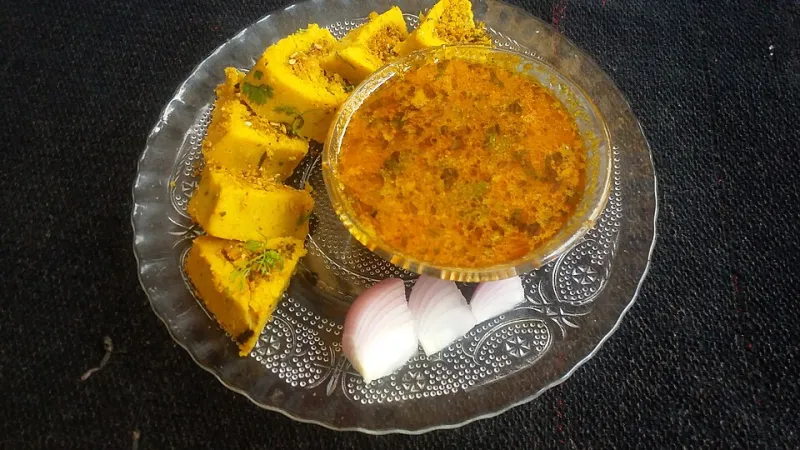
Photo: Indian vegetarian plant-based food colorful dishes modern restaurant Pune, via i.pinimg.com
If your image of Indian vegetarian food is a plate of dal, rice, and maybe a paneer dish on special occasions, you haven't been paying attention to what's happening in Pune right now. Something genuinely exciting is unfolding in the city's kitchens — restaurant, home-based, and pop-up alike — and it doesn't fit neatly into the wellness-trend box that Western food media tends to shove it into.
This isn't about making Indian food "clean" for a Western audience. It's not about swapping ghee for oat milk and calling it a revolution. What's happening in Pune is messier, more interesting, and far more rooted than that. It's a conversation between generations, between traditions, between the street cart outside and the fermentation lab upstairs.
The Problem With "Indian Vegetarian" as a Category
Here's the thing about Indian vegetarian food that often gets lost in translation: it was never one thing. Maharashtra alone has regional vegetarian traditions that vary dramatically by caste, season, community, and geography. The Konkan coast's coconut-heavy preparations look nothing like the dry, spiced dishes of the Vidarbha region. Pune, sitting at the cultural crossroads of the Deccan plateau, has always absorbed and remixed these influences.
What the new generation of Pune food creators is doing is essentially making that complexity visible — and then pushing it further. They're asking: what happens when you apply fermentation techniques borrowed from Korean cuisine to traditional Maharashtrian ingredients? What does a raw food approach do to the flavor profile of a classic amboli batter? Can ancient grains like jowar and bajra carry a dish that would hold its own on a tasting menu in New York or Chicago?
Spoiler: yes, they absolutely can.
The Chefs Leading the Charge
Nandita Kulkarni didn't set out to start a food movement. She started a tiffin service in Baner because she was tired of her corporate job and wanted to cook. What she didn't expect was that her weekly rotating menu — which featured things like raw jackfruit prepared with smoked spices, or a beet and tamarind soup that took clear inspiration from Eastern European borscht without apologizing for it — would develop a cult following that now includes a waiting list.
"People kept asking me, 'Is this Indian food?' And I'd say, it's food made by an Indian person using Indian ingredients with Indian sensibility. What else would it be?" she says, laughing.
Across town in Aundh, chef Vikram Joshi runs a small restaurant that seats twenty people and has been fully booked on weekends for the past eighteen months. His menu changes seasonally and sources almost entirely from farmers within a 150-kilometer radius of Pune. The food isn't labeled vegan or plant-based anywhere on the menu — a deliberate choice. "The moment you put those words on it, people come in with a checklist," Vikram explains. "I want them to just eat it and feel something."
His current menu includes a preparation of raw banana stem that takes three days to develop, a dish of wild mushrooms from the Sahyadri foothills cooked in a reduction of kokum and black pepper, and a dessert made from water chestnut flour and palm jaggery that's been drawing comparisons — somewhat bafflingly — to a very good panna cotta.
The Sustainability Thread
What ties many of these creators together isn't a shared aesthetic or even a shared technique — it's a shared anxiety about waste. India generates enormous amounts of food waste, and the vegetable-heavy nature of plant-based cooking means there's a particular sensitivity to how every part of an ingredient gets used.
At a small pop-up collective that operates out of a community kitchen in Kothrud, the philosophy is explicit: nothing gets thrown out. Banana peels become crisps. Spent spice pulp gets dried and turned into seasoning blends. Vegetable scraps go into fermented stocks. It sounds like extreme frugality, but in practice it produces flavors that are genuinely surprising — deeper, more complex, and harder to replicate with conventional cooking shortcuts.
Dietitian and food activist Sunita Rao, who consults with several Pune restaurants and runs nutrition workshops for home cooks, frames it as a return to something that was always there. "Our grandmothers didn't throw anything away — not because it was trendy, but because it was practical. What we're doing now is taking that wisdom seriously again, and adding knowledge about why it actually works nutritionally."
Diaspora Curiosity Is Fueling the Fire
Here's an angle that might surprise American readers: a significant part of the demand driving this movement is coming from the Indian diaspora. Second-generation Indian Americans, many of whom grew up eating a version of home cooking that was adapted for American kitchens and American ingredient availability, are increasingly curious about what the food actually looks and tastes like when made with the real thing.
Some are traveling to Pune specifically to eat. Others are following Pune food creators on Instagram and trying to recreate dishes at home in the US. The interest has created a feedback loop — Pune chefs are increasingly aware that they have an international audience, which paradoxically makes them more committed to authenticity, not less. There's a pride in showing what the original looks like before it gets softened for export.
"Someone flew in from New Jersey to come eat at my place," Nandita says, still sounding slightly incredulous about it. "She told me her mom used to make something similar but she'd never tasted it with fresh kokum before. That hit me differently."
Where This Is All Going
Pune's plant-based food movement doesn't have a manifesto or a PR strategy. It's not trying to compete with the global oat-milk industrial complex. What it is doing — quietly, persistently, one tasting menu and one tiffin box at a time — is making a case that Indian vegetarian cooking doesn't need to be reimagined for Western tastes to be extraordinary. It just needs room to be fully itself.
For food lovers in the US who've only encountered Indian vegetarian food through the lens of buffet steam trays or Instagram-friendly golden lattes, Pune right now is an invitation to recalibrate. The food here is older and newer than anything you've tried, and it's not waiting for anyone's approval to keep evolving.