Incense and Bass Drops: Inside Pune's Wild Balance Between Enlightenment and the Dancefloor
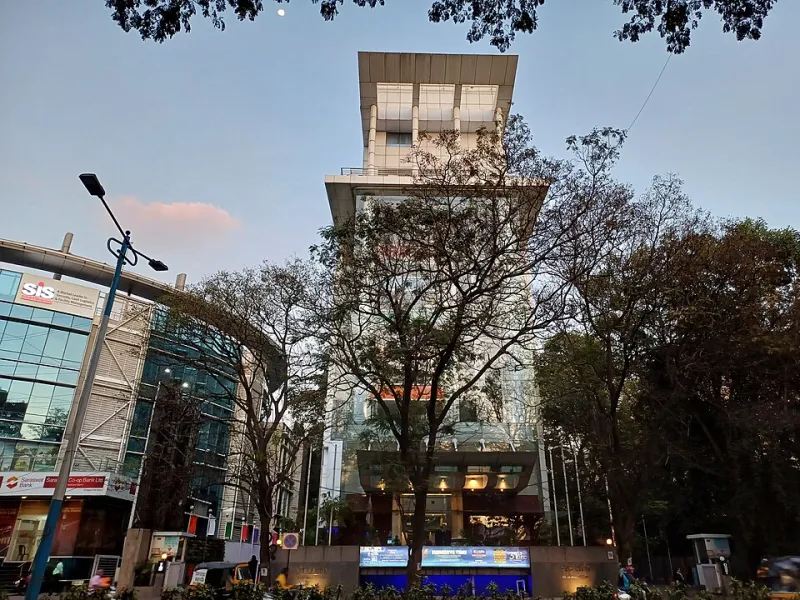
Photo: DesiBoy101, CC BY 4.0, via Wikimedia Commons
Imagine waking up to the sound of Sufi chants drifting across a lush garden, sharing a breakfast of fresh fruit with a Danish philosopher and a software engineer from Austin, Texas — and then, twelve hours later, watching that same Danish philosopher absolutely lose it on a dancefloor to a Berlin-based DJ spinning deep techno. That's a Tuesday in Pune.
No other city in India quite pulls off this particular trick. Not Mumbai, with its relentless commercial energy. Not Goa, which leans so hard into the hedonism that the spiritual stuff feels like an afterthought. Pune exists in its own lane — a mid-sized Maharashtra city of roughly 7 million people that has somehow become the unlikely crossroads between inner peace and peak-hours nightlife.
How did it get here? The answer stretches back further than you might think.
The Osho Effect: A Legacy That Still Shapes Everything
You can't talk about Pune's cultural identity without starting with Bhagwan Shree Rajneesh — later known simply as Osho. When he established his ashram in the upscale Koregaon Park neighborhood in 1974, it triggered a migration of spiritual seekers from Europe, the US, and Australia that quietly rewired the city's DNA.
The Osho International Meditation Resort still operates today, drawing tens of thousands of visitors annually. But its influence extends well beyond its gates. Koregaon Park — or KP, as locals call it — evolved into a neighborhood unlike anything else on the subcontinent: tree-lined lanes, boutique cafes, yoga studios, and a population of long-term Western expats who arrived looking for something and just... stayed.
"I came for a ten-day silent retreat in 2009," says Marcus, a 41-year-old from Portland who now runs a wellness consulting business out of Pune. "I genuinely thought I'd be back in Oregon within a month. Fifteen years later, I'm still here. The city has this quality of not demanding anything from you, which is rare in India. It lets you breathe."
That breathing room created fertile ground for something unexpected.
When the Seekers Started Dancing
Here's the thing about a city full of people who've already questioned conventional life structures: they tend to be pretty open to new experiences. Through the 1990s and 2000s, as India's economy liberalized and a young, educated middle class emerged in Pune — fueled by the city's booming IT sector and prestigious universities — the nightlife scene began to evolve in ways that felt genuinely different from the bottle-service-and-Bollywood formula dominating Mumbai clubs.
Electronic music found particularly receptive ears here. Partly because the expat and spiritual-seeker crowd had brought with them a taste for trance, ambient, and world music. Partly because Pune's student population skewed young and internationally curious. And partly because the city's geography — compact, walkable in the right neighborhoods, with venues clustered in areas like Koregaon Park, Kalyani Nagar, and Baner — made a genuine scene possible in a way that sprawling Mumbai never quite managed.
"Pune was doing underground electronic nights before it was a thing anywhere else in India," says Priya Kulkarni, a Mumbai-based music journalist who has covered the Indian club scene for over a decade. "The crowd here is different. They actually listen. They're not just there to be seen."
Today, the city hosts a rotating calendar of events that would look right at home in a Brooklyn loft or a Portland warehouse: intimate techno nights, psytrance gatherings that spill into forest clearings on the city's outskirts, ambient listening sessions that blur the line between concert and meditation. International acts now regularly include Pune on India tour schedules that once skipped straight from Mumbai to Bangalore.
The Contradiction That Isn't
What's fascinating — and what genuinely puzzles first-time visitors — is how little tension exists between these two worlds. The woman running the sound bath at a Koregaon Park wellness studio on Saturday morning might be at a four-hour DJ set Saturday night. The German guy who spent his morning in silent meditation at the Osho resort is buying a gin and tonic at a rooftop bar by 9 PM.
Long-term expats and locals tend to shrug when you point this out. To them, it's not a contradiction at all.
"In the West, we've built this wall between the sacred and the pleasurable," says Ananya Desai, a Pune-born cultural anthropologist who studied in the US before returning home. "Pune kind of dissolved that wall, partly by accident. When you have this long history of questioning orthodoxy — which the Osho movement represented, whatever you think of its baggage — it creates permission. Permission to be many things at once."
There's also something to be said for the city's relationship with its own identity. Unlike Mumbai, Pune doesn't feel the need to perform for outsiders. Unlike Goa, it isn't primarily organized around tourism. It has its own rhythm, its own internal logic, and it doesn't particularly care if you understand it.
What American Visitors Actually Find Here
For US travelers — particularly those who've done the Tulum circuit, explored Berlin's club scene, or spent time in the wellness communities of places like Sedona or Ojai — Pune offers something genuinely hard to categorize. It's not a party destination in the Ibiza sense. It's not a spiritual retreat in the Bali sense. It's messier and more interesting than either.
The food scene in Koregaon Park alone could justify the trip — more on that in a separate piece — but the cultural texture is what keeps people coming back. One afternoon you're deep in a conversation about consciousness at a cafe that feels like it was teleported from Portland. That evening, you're watching a Pune-based DJ blend Indian classical motifs with modular synthesizer textures in a courtyard that used to be a colonial-era bungalow.
"I've traveled a lot," says Jamie, a 34-year-old from Chicago who visited Pune for the first time last year after a friend's recommendation. "I've done the Southeast Asia backpacker thing, I've been to Burning Man twice. Pune hit different. It felt like a place that had actually figured something out, rather than a place performing the idea of having figured something out."
That distinction — authentic versus performed — might be the most useful frame for understanding what Pune has quietly built over the past fifty years. It didn't set out to become India's spiritual-hedonistic capital. It just followed its own strange, open-hearted logic until it arrived somewhere entirely its own.
The incense and the bass drops were never opposites here. They were always just two ways of paying attention.