Distance as a Feature: How the Right Pune Remote Structure Consistently Beats the Open-Floor Plan

For decades, American business culture has treated co-location as a prerequisite for high performance. The open-plan office, the standing meeting, the hallway conversation—these have been enshrined as the engines of organizational velocity. Yet a growing body of evidence from US companies operating with Pune-based remote teams is quietly dismantling this assumption. When structured deliberately, distributed teams in Pune are not merely matching the output of their on-site counterparts. In many measurable respects, they are exceeding it.
This is not an argument for remote work as a universal remedy. It is a precise observation: the companies that have invested in building the right remote infrastructure in Pune are seeing productivity gains that their co-located competitors cannot easily replicate. Understanding why requires looking carefully at what those companies are actually doing differently.
The Co-location Assumption and Where It Breaks Down
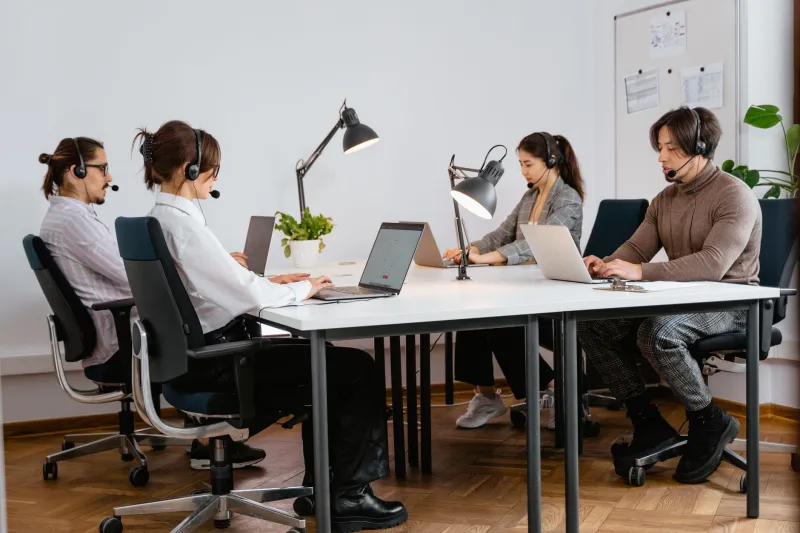
The intuition behind co-location is sound in theory. Shared physical space reduces communication latency, accelerates decision-making, and builds the informal social bonds that sustain team cohesion. In practice, however, open offices frequently deliver the opposite. Research consistently shows that open-plan environments increase interruptions, fragment deep work, and generate a kind of performative busyness that looks like productivity without producing it.
For US companies hiring in Pune, the co-location assumption carries an additional cost that rarely appears in initial projections: the overhead of maintaining or subsidizing physical office space in one of India's most competitive commercial real estate markets. Companies that insist on hybrid or fully on-site arrangements for their Pune teams are often paying a premium for infrastructure that actively undermines the focused, asynchronous work that knowledge professionals do best.
The teams outperforming this model are not simply working remotely. They are working remotely with intention.
What High-Performing US–Pune Teams Actually Look Like
The distinguishing characteristic of Pune remote teams that consistently outperform is not the technology they use—it is the operating logic that governs how they work. Several structural elements appear repeatedly across the highest-performing engagements.
Defined deep work windows. Rather than treating the workday as a continuous stream of availability, successful teams carve out protected blocks—typically four to five hours—during which engineers and analysts are unreachable for anything short of a genuine emergency. These windows are not informal suggestions. They are written into team charters and respected by US-side managers. The cognitive output produced during these periods consistently surpasses what the same professionals generate in interrupt-heavy office environments.
Outcome accountability over activity monitoring. One of the most common failure modes in US–Pune remote relationships is the impulse to substitute surveillance for management. Screen-monitoring software, mandatory status updates every two hours, and rigid login windows signal distrust and suppress the autonomous problem-solving that makes senior Pune talent valuable in the first place. Teams that measure output against clearly defined sprint goals, rather than monitoring activity proxies, report significantly higher engagement and retention.
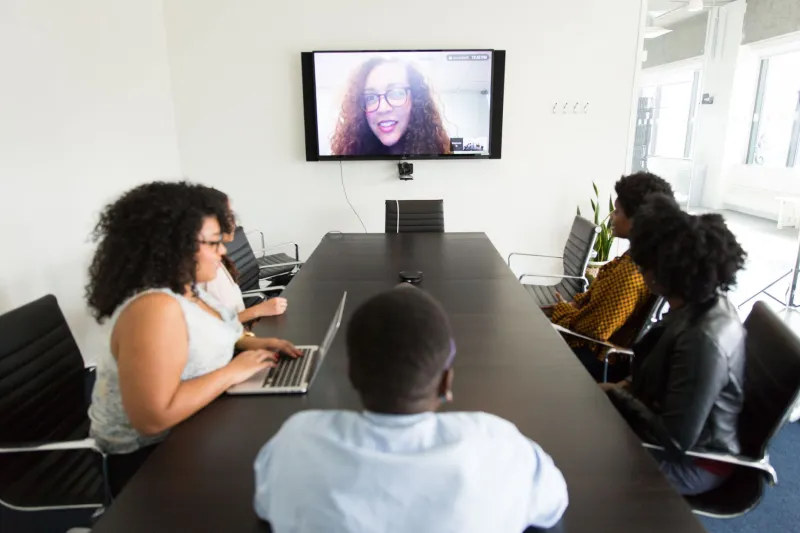
Overlap hours used for alignment, not execution. The three to four hours of daily overlap between US Eastern time and Pune's working day are a finite and valuable resource. High-performing teams treat this window as reserved for decisions, escalations, and relationship-building—not for the kind of heads-down execution work that can and should happen independently. When US managers schedule status calls during this window instead of reserving it for consequential conversations, they are spending a premium resource on low-value transactions.
The Financial Case Against Unnecessary On-Site Overhead
For US companies that have insisted on maintaining physical offices for their Pune teams—either because of internal policy or a misplaced belief that visibility drives accountability—the cost calculation is worth revisiting with fresh numbers.
Commercial office space in Pune's tech corridors, including areas like Hinjewadi, Baner, and Kharadi, has appreciated meaningfully over the past several years as demand from both domestic and multinational employers has intensified. A mid-sized team of fifteen engineers occupying a dedicated office incurs not only rent but facilities management, utilities, equipment refresh cycles, and the soft cost of a commute culture that erodes the focused morning hours that remote workers reclaim.
Companies that have transitioned to fully remote or stipend-based home-office models for their Pune teams frequently report that the savings fund two to three additional senior hires annually—a compounding advantage that grows with each hiring cycle.
The Management Discipline Required
It would be misleading to suggest that remote productivity advantages are automatic. They are not. They are the product of management discipline that many US organizations find genuinely difficult to sustain.
The most common failure pattern is what might be called the reversion to presence. A team is initially structured well, with clear async documentation norms and outcome-based accountability. Over time, as US managers rotate or new stakeholders join, the instinct to re-introduce synchronous check-ins, mandatory video availability, and real-time status reporting begins to creep back in. Within two quarters, the team's effective deep work hours have been halved and attrition among senior professionals begins to climb.
Preventing this reversion requires treating the remote operating model as a formal artifact—something documented, onboarded, and enforced with the same rigor as a technical architecture decision. Teams that maintain a written remote charter, revisit it quarterly, and hold US-side managers accountable for compliance sustain their productivity advantages over multi-year horizons.
Building for the Long Structural Advantage
The companies winning with Pune remote talent are not doing so because they found better engineers. They are winning because they built better systems around those engineers. The productivity paradox dissolves once you accept that distance, properly managed, removes more friction than proximity adds.
For US companies still investing in on-site overhead for their Pune teams, the question worth asking is not whether remote work can match office performance. The evidence suggests it can exceed it. The more useful question is what it would take to build the management discipline and operational infrastructure to capture that advantage—and whether the cost of that investment is smaller than the cost of continuing to pay for office space that is actively working against you.
At PuneCG, we work with US companies at precisely this inflection point: organizations that have Pune talent in place but have not yet built the systems to extract its full value. The gap between a functioning remote team and a genuinely high-performing one is almost never about the engineers. It is about the architecture surrounding them.