Beyond the Time Zone: Building Genuine Trust Between US Headquarters and Pune Teams
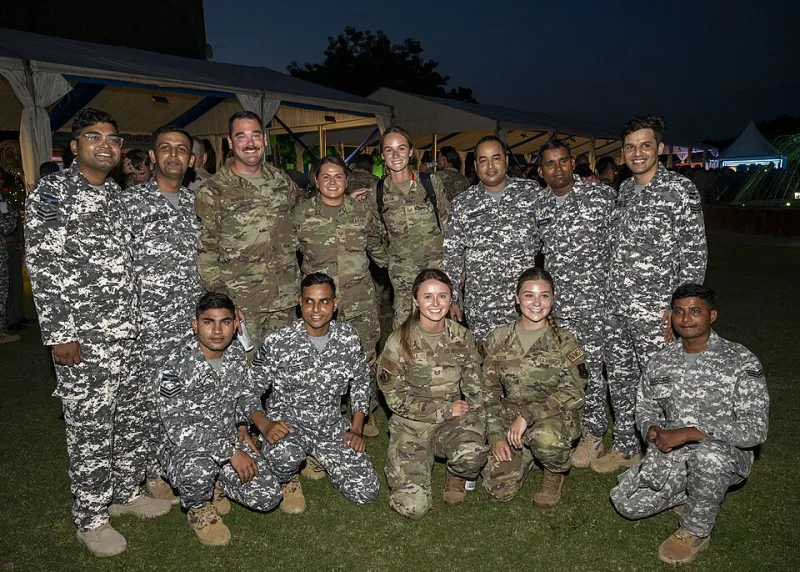
Photo: U.S. Air Force photo by Senior Airman Sabrina Fuller-Judd, Public domain, via Wikimedia Commons
The Infrastructure Problem Is Solved. The Human Problem Isn't.
Ask any US founder who has built a team in Pune about their biggest operational challenges, and the answers rarely involve technology. The video conferencing works. The project management tools are in place. The code repositories are synchronized. What keeps experienced team leads awake at night is something more elusive: the sense that despite months of collaboration, their US and Pune colleagues still feel like inhabitants of parallel worlds rather than members of a single, integrated team.
This gap — call it the trust deficit — is the defining challenge of US-India distributed work, and it is one that no software subscription can fully address.
Communication Styles: The Gap Beneath the Gap
One of the first things US managers notice when working with Pune-based professionals is a communication pattern that can initially read as passivity or lack of initiative. Questions go unasked in group settings. Pushback on unrealistic deadlines is rare. Concerns about project direction surface privately, if at all.
What US managers are often encountering is not a lack of engagement — it is a fundamentally different set of assumptions about what professional communication should look like.
In many Indian professional contexts, particularly for those who came up through large IT organizations or traditional engineering colleges, openly challenging a senior colleague's position in a group meeting is understood as disrespectful rather than constructively critical. Admitting uncertainty or flagging a problem can feel like an acknowledgment of personal failure rather than a normal part of collaborative problem-solving.
A US engineering director who spent three years building a hybrid team in Pune described the moment this clicked for her: "I kept wondering why my Pune lead never pushed back in our all-hands calls, even when I could tell he had reservations. Then I had a one-on-one with him and got forty-five minutes of the most incisive product feedback I'd received all year. I had built the wrong venue for the conversation I needed."
The practical implication is significant: US teams that rely exclusively on group meetings and shared Slack channels as their feedback mechanisms will systematically underutilize the perspectives of their Pune colleagues. Building in structured one-on-one touchpoints, asynchronous feedback channels, and explicit invitations to dissent — framed carefully — changes the dynamic considerably.
The Calendar Nobody Talks About
The standard US corporate calendar — built around Thanksgiving, Christmas, July Fourth, and a handful of federal holidays — is the invisible default setting of most American-led distributed teams. Pune professionals navigating this calendar face a quiet but persistent signal: that the rhythms of their lives are secondary to the operational cadence of a headquarters twelve time zones away.
Pune's festive calendar is rich and genuinely significant. Diwali, Ganesh Chaturthi, Holi, Eid, and a constellation of regional observances are not simply days off — they are cultural anchors around which family and community life is organized. A Pune developer asked to deliver a critical sprint during Diwali week is not merely being asked to work harder; they are being asked to deprioritize something that carries deep personal meaning.
US companies that have made the deliberate choice to acknowledge this calendar — not by eliminating deadlines, but by planning around predictable high-significance periods and visibly celebrating them as a team — report a measurable improvement in team cohesion. Some have gone further, incorporating brief acknowledgments of major Indian holidays into all-hands meetings, an act that costs nothing and communicates a great deal.
Mistakes That Experienced Teams Have Made — and Recovered From
The founders and team leads who have built the most integrated US-Pune partnerships are often the most candid about their early missteps. Several patterns emerge consistently.
Assuming directness is universal. A US product manager who opened her first meeting with Pune contractors by saying "Tell me what's broken" intended to signal psychological safety. What her Pune colleagues heard was an ambiguous test. The invitation to criticize was too broad, too sudden, and too public. She has since learned to ask specific, bounded questions — "What is one thing about this sprint process that we could improve?" — which feel safer and generate more honest responses.
Scheduling without consulting. Recurring all-hands calls locked into 9 AM Eastern time — which falls at 6:30 PM or 7:30 PM in Pune depending on the time of year — are a persistent source of low-level resentment. Pune professionals who routinely miss family dinners or evening routines to accommodate US scheduling preferences will rarely voice their frustration directly. They will simply begin to disengage. Teams that rotate meeting times, or that invest in high-quality asynchronous alternatives, demonstrate a reciprocity that builds trust over time.
Conflating availability with engagement. The green dot on Slack is not a reliable proxy for a Pune team member's actual engagement or wellbeing. Several US managers have described the uncomfortable realization that their most "available" Pune colleagues were, in fact, the most burned out — logging on early, signing off late, and absorbing communication load without complaint until the resignation came.
Frameworks That Create Genuine Integration
The teams that have moved beyond coexistence to genuine integration tend to share a few structural commitments.
The cultural liaison role. Some US companies have formalized a role — sometimes called a culture lead or integration manager — held by a senior Pune-based professional who serves as an interpreter between the two sides of the organization. This person is not an HR function; they are a trusted translator of context, flagging when US decisions are landing poorly in Pune and helping Pune team members navigate the unwritten rules of American professional culture.
Reverse onboarding. Rather than simply introducing new Pune hires to US culture and processes, high-functioning teams have built reverse onboarding programs that introduce US employees to the professional context their Pune colleagues come from — the academic pressures of the IIT entrance culture, the structure of large Indian IT firms, the significance of family obligations. Understanding where a colleague comes from changes how you interpret their behavior.
Shared rituals, not shared holidays. The most integrated teams have invented their own rituals rather than simply importing American ones. Virtual team lunches where Pune and US members share food from their respective cities. Slack channels dedicated to photos from local festivals on both sides. Quarterly retrospectives that explicitly surface cultural friction rather than papering over it. These rituals create a shared cultural vocabulary that belongs to the team rather than to either geography.
Trust Is Built in the Margins
The most honest thing that can be said about US-Pune team dynamics is that trust is not built in the big moments — not in the all-hands calls or the quarterly business reviews. It is built in the accumulated texture of small interactions: the US manager who remembered that a Pune colleague was preparing for his sister's wedding and checked in afterward; the Pune team lead who flagged a potential client communication issue before it became a problem, because she trusted that the feedback would be received well.
Building that texture requires intention, consistency, and a willingness to examine the cultural assumptions that both sides bring to the relationship. The companies that do this work will not simply have more productive distributed teams — they will have built something genuinely rare: organizations where geography is a fact, but where it is not, in any meaningful sense, a barrier.